
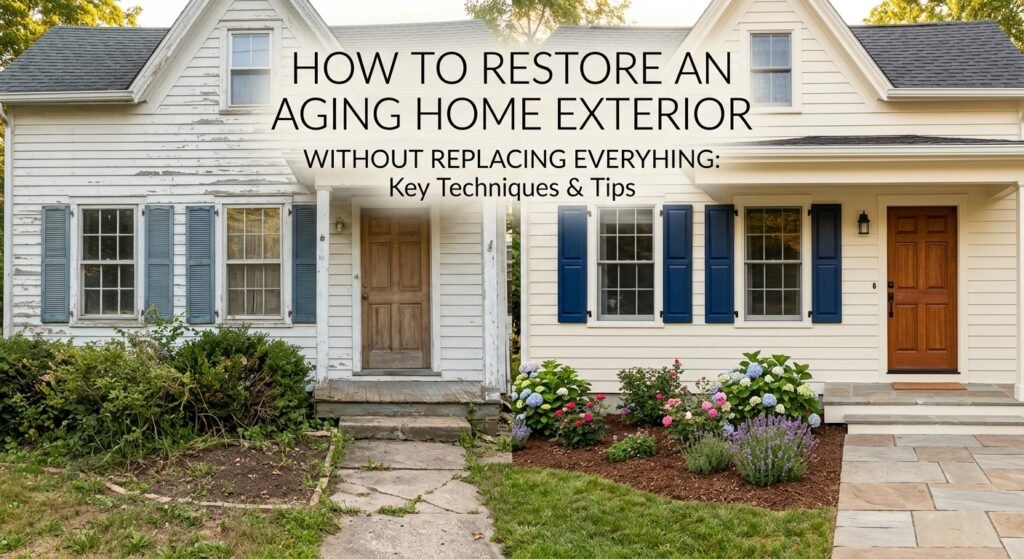
Your home’s exterior takes a lot of abuse from the weather. In the GTA, changing seasons, rain, snow, freezing temperatures, sunlight, and humidity can gradually make siding, trim, decks, fences, and other outdoor surfaces look old.
When the exterior starts showing signs of wear, many homeowners assume that a complete replacement is the only solution. In many cases, that is not necessary.
A professional exterior restoration can improve the appearance and protection of your home without replacing every surface. The key is knowing which areas need cleaning, repairing, staining, painting, or refinishing.
What Does Exterior Restoration Mean?
Exterior restoration focuses on improving and protecting existing surfaces instead of completely removing and replacing them.
Depending on the condition of your home, restoration may include:
- Pressure washing
- Soft washing
- Exterior painting
- Siding spraying
- Deck staining
- Fence staining
- Minor surface repairs
- Trim and fascia painting
- Cleaning and preparation
- Protective coatings and finishes
The right combination depends on the material, age, condition, and type of damage.
Signs Your Home Exterior May Need Restoration
Not every aging exterior needs replacement. Look for these common warning signs.
Faded or Discoloured Surfaces
Paint and siding can lose their original colour after years of exposure to sunlight. Fading does not always mean the material itself has failed.
A thorough cleaning followed by professional painting or siding spraying can give the surface a refreshed appearance.
Dirt, Algae, and Mildew
Exterior surfaces can collect dirt and organic growth over time. This is especially common around shaded areas and surfaces exposed to moisture.
Soft washing or pressure washing can remove accumulated buildup when the appropriate method is used for the surface.
Peeling or Chipping Paint
Peeling paint is a sign that the surface needs attention. Simply adding another coat over damaged paint usually does not provide a long-term solution.
The old coating may need to be scraped, prepared, repaired, primed, and repainted.
Weathered Wood
Decks, fences, railings, and other wood surfaces can become dry, faded, and rough.
If the wood is still structurally sound, cleaning, preparation, and staining may restore its appearance without replacing the entire structure.
Tired-Looking Trim
Trim around windows, doors, soffits, and other exterior areas can make a noticeable difference to curb appeal.
Even when the main exterior remains in good condition, refreshing these details can make the entire property look newer.
Restoration vs. Replacement
The biggest question is whether a surface can be restored or needs to be replaced.
| Exterior Problem | Possible Restoration | When Replacement May Be Needed |
|---|---|---|
| Faded siding | Cleaning and siding spraying | Severe structural damage |
| Dirty exterior | Soft washing or pressure washing | Damaged material |
| Peeling paint | Surface preparation and repainting | Extensive substrate deterioration |
| Weathered deck | Cleaning, repairs and staining | Major structural deterioration |
| Faded fence | Cleaning and staining | Broken or severely damaged boards |
| Old exterior trim | Repair and painting | Rot or significant deterioration |
The important point is that appearance problems and structural problems are not the same.
A surface can look old while still being suitable for restoration.
1. Start With a Professional Exterior Cleaning
Cleaning is often the first step in an exterior restoration project.
Years of dirt can hide the actual condition of a surface. Removing buildup makes it easier to identify areas that need repairs, painting, or staining.
Pressure washing can be suitable for durable surfaces such as certain concrete and masonry areas. More delicate materials may require a gentler soft washing approach.
Using too much pressure on the wrong material can cause unnecessary damage. That is why the cleaning method should be selected according to the surface.
2. Refresh Faded Siding Instead of Replacing It
Siding replacement can be a major project. If the existing siding is structurally sound but looks faded or outdated, spraying may provide another option.
Professional siding spraying can refresh the colour and appearance of suitable siding while allowing homeowners to keep the existing material.
This can be particularly useful when the siding is still performing properly but no longer matches the look you want.
3. Repaint the Exterior for a Major Visual Change
Exterior painting can have a significant effect on curb appeal.
A new colour can modernize an older property without changing its basic structure. It can also refresh areas such as:
- Siding
- Trim
- Doors
- Shutters
- Fascia
- Exterior accents
However, proper preparation is just as important as the paint itself.
Surfaces should be cleaned and checked for peeling coatings, cracks, damaged areas, and other problems before painting begins.
4. Restore Your Deck With Cleaning and Staining
An older deck does not automatically need to be rebuilt.
If the structure remains in good condition, restoration may involve cleaning, minor repairs, surface preparation, and staining.
A quality stain can improve the appearance of weathered wood while helping protect it from moisture and outdoor exposure.
Choosing between a transparent, semi-transparent, or more solid finish depends on the appearance and level of coverage you want.
5. Give an Old Fence a New Look
Fence replacement can become expensive when only the appearance has deteriorated.
If the fence is still structurally sound, cleaning and staining may provide a more practical solution.
A professional fence staining project can help bring back colour and provide a more finished appearance. Before staining, damaged boards and other obvious issues should be addressed.
6. Do Not Ignore Small Repairs
Small exterior problems can become larger if they are left untreated.
During restoration, check areas such as:
- Loose boards
- Cracked trim
- Damaged caulking
- Peeling paint
- Minor wood deterioration
- Loose railings
- Damaged exterior surfaces
Addressing smaller problems before applying a new finish can help the finished project look better and last longer.
7. Update the Colour Scheme
Sometimes an exterior looks outdated because of its colour rather than its condition.
A new colour scheme can make an older home feel more modern.
For example, homeowners may use a neutral primary colour with a complementary trim colour and a stronger accent on the front door.
The goal is to create a coordinated appearance that works with the home’s architecture and surrounding property.
Why Exterior Restoration Can Make Sense for GTA Homes
Homes across Brampton, Toronto, Mississauga, Oakville, Burlington, Vaughan, and surrounding GTA communities experience significant seasonal changes.
Exterior surfaces need to handle summer heat, winter freezing temperatures, precipitation, and repeated changes in moisture.
Regular maintenance can help homeowners identify problems before they become larger projects.
Restoration can also allow homeowners to improve curb appeal while keeping materials that are still in usable condition.
A Practical Exterior Restoration Plan
A simple restoration project can follow this process:
Step 1: Inspect the exterior
Identify faded, dirty, damaged, peeling, or weathered areas.
Step 2: Clean the surfaces
Remove dirt, algae, mildew, and other buildup using the appropriate cleaning method.
Step 3: Repair problem areas
Fix minor surface issues before applying new coatings or stains.
Step 4: Choose the right finish
Decide whether the surface needs paint, stain, siding spraying, or another appropriate finish.
Step 5: Prepare the surface
Proper preparation helps the new finish adhere correctly and provides a more consistent appearance.
Step 6: Complete the restoration
Apply the selected coating or stain according to the requirements of the surface.
Step 7: Maintain the exterior
Regular cleaning and inspections can help preserve the results.
When Should You Replace Instead of Restore?
Restoration is not the right answer for every property.
Replacement may be more appropriate when the material has serious structural damage, extensive rot, severe deterioration, or problems that cannot be corrected through cleaning, repair, painting, or refinishing.
A professional assessment can help determine whether restoration is practical.
The goal should not be to restore something that has reached the end of its useful life. Instead, homeowners should look for opportunities to preserve materials that are still structurally sound.
Final Thoughts
An aging home exterior does not always require a complete replacement.
Cleaning, repairs, exterior painting, siding spraying, deck staining, and fence staining can often transform tired outdoor surfaces while preserving materials that are still in good condition.
For GTA homeowners, the best approach is to assess the condition of each surface before deciding on a major replacement project.
If your home exterior looks old, faded, dirty, or weathered, restoration may be a practical way to improve its appearance and protection without starting from scratch.
Ready to refresh your home’s exterior? Contact Pro Renewal Services. for a professional assessment and a free estimate for your GTA home.
Frequently Asked Questions
Can an old house exterior be restored without replacement?
Yes. If the existing materials are structurally sound, cleaning, repairs, painting, staining, or siding spraying may significantly improve their appearance.
Is pressure washing enough to restore an old exterior?
Pressure washing can remove dirt and buildup, but it does not correct every exterior problem. Some surfaces may need painting, staining, repairs, or another treatment after cleaning.
Can faded siding be painted instead of replaced?
In some cases, suitable siding can be professionally painted or sprayed. The condition and material of the siding should be assessed before choosing this approach.
Can a weathered deck be stained instead of replaced?
Yes, if the deck remains structurally sound. Cleaning, minor repairs, preparation, and staining may restore its appearance.
How often should a home exterior be inspected?
It is useful to inspect exterior surfaces regularly, particularly after harsh winter weather and before major maintenance or painting projects. Early identification of problems can make restoration easier.

